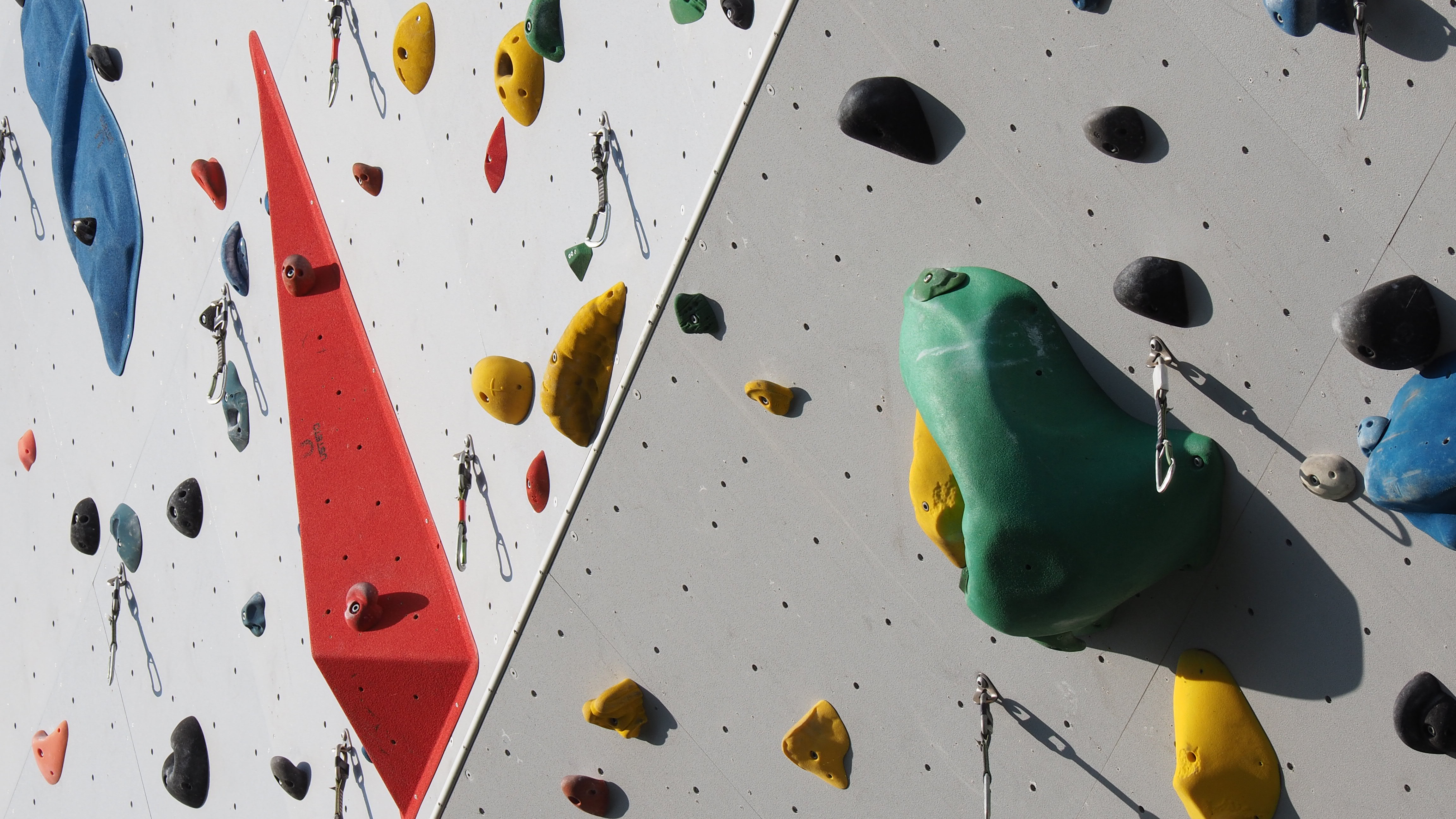
Holds
Grip Types on Indoor Holds
Jugs, crimps, slopers, pinches and pockets feel different and ask for different hand positions. Knowing the names speeds up route reading.
Read the articleIndoor Climbing · Canada
Indoor climbing in Canada runs from neighbourhood bouldering rooms to tall rope facilities. This reference covers what a first-time climber needs to understand: how holds are gripped, how the body moves on a wall, and the floor etiquette that keeps a busy session safe.

Where to begin
Most Canadian gyms split into bouldering (low walls over padded floors, no ropes) and roped climbing (top-rope and lead). The fundamentals below apply to both. Read them in sequence the first time.
Jugs, crimps, slopers, pinches and pockets feel different and ask for different hand positions. Knowing the names speeds up route reading.
Read the article
Weight on the feet, hips close to the wall, and deliberate weight shifts do more than arm strength. A few habits change everything early on.
Read the article
Falling zones, downclimbing, and not walking under climbers. Etiquette at a gym is mostly about shared space and predictable behaviour.
Read the articleHow a first visit usually goes
No harness or rope. Climbs are short, graded by colour or a V-style scale that varies by gym, and you step or jump down onto matting. Most Canadian facilities ask for a short orientation before your first session.
Top-rope and lead use a harness, a belayer and a belay check. Facilities typically require a belay test or a staff-run intro before you can belay unsupervised. Auto-belays let you climb roped routes solo where available.
Read the facility's posted rules and complete the in-person orientation at your specific gym. Equipment, grading and floor layout differ between locations, and the staff briefing always takes priority over general reading like this.
Contact
If something in these articles is unclear, send a note and we will consider it for a future revision. This form does not book sessions or contact any specific gym.