Grip Types on Indoor Climbing Holds
Indoor holds are shaped plastic or rubberised resin bolted to the wall. Their shape decides how your hand sits on them far more than how hard you pull. Learning the common shapes lets you plan a sequence instead of grabbing and hoping.
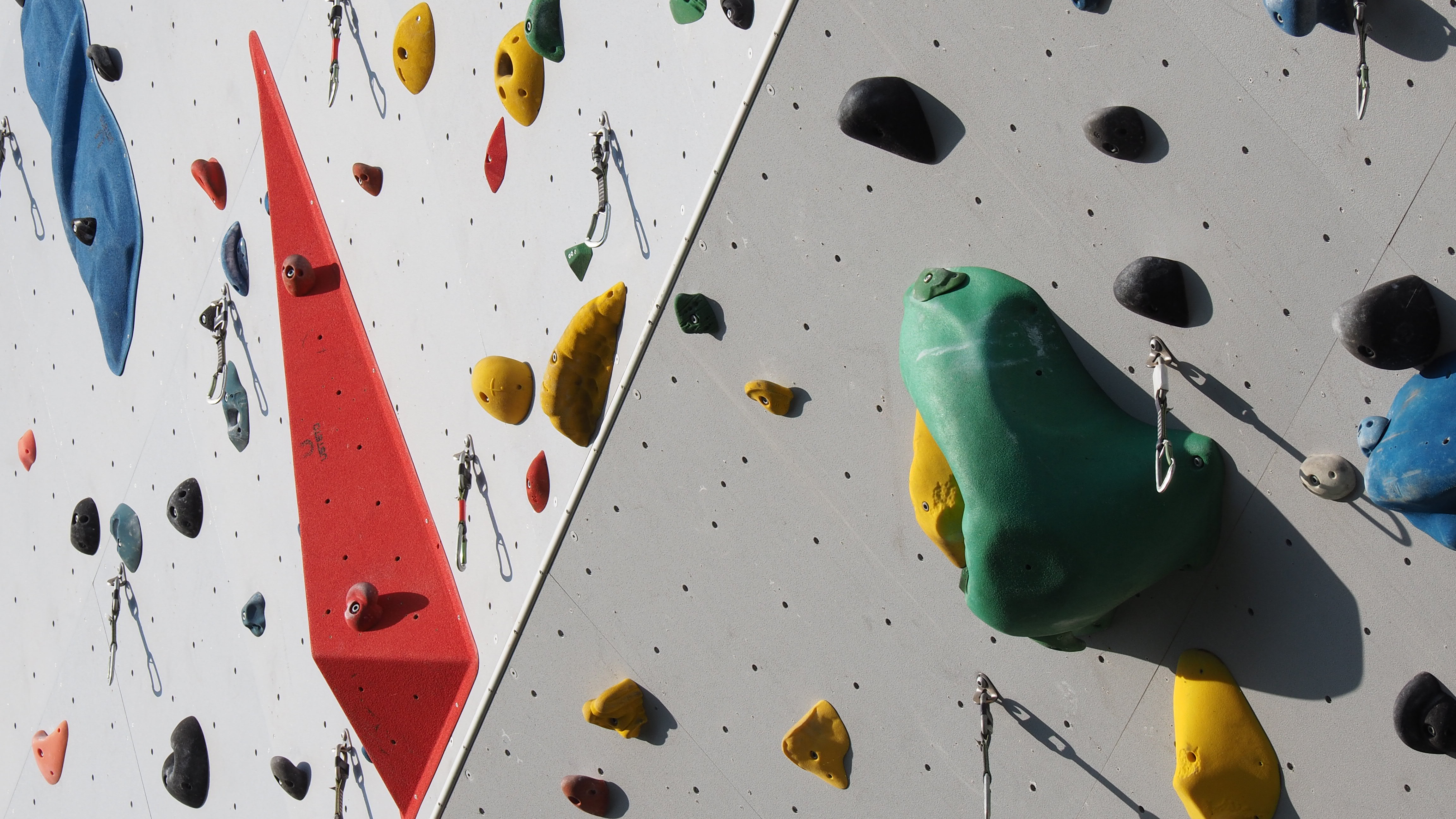
The five shapes you meet first
Hold names are informal and overlap, but most gyms and climbers use the same handful of terms. Each shape rewards a slightly different hand and body position.
Jugs
A jug is a large, positive hold you can wrap your whole hand around, often with room for both hands. Beginner routes are usually built mostly from jugs. They let you rest, shake out a forearm, and plan the next move without much grip tension.
Crimps
A crimp is a thin edge that only takes the pads of the fingers. Fingers bend at the first knuckle and the thumb sometimes presses over the index finger. Crimps load the fingers and tendons heavily, so newcomers are generally advised to use them lightly and avoid full closed-crimp positions until conditioning builds over months.
Slopers
A sloper is a rounded, holdless-looking bulge with no clear edge. Grip comes from skin friction and an open hand draped over the surface. Slopers reward keeping the body low and the weight under the hand rather than pulling outward.
Pinches
A pinch is gripped between thumb on one side and fingers on the other, like holding a thick book spine. Pinch strength develops with practice; early on it helps to square your body to the wall so the squeeze direction lines up with the hold.
Pockets
A pocket is a hole that fits one, two or three fingers. Single-finger pockets place a lot of load on one tendon and are uncommon on beginner routes for good reason. When you meet a pocket, use as many fingers as fit.
Reading a route by its holds
Before stepping on, trace the route with your eyes. On a marked indoor route every hold of one colour or tag belongs to the same problem. Identifying jugs as rests and crimps or slopers as the harder sections helps you decide where to move quickly and where to set up carefully.
On finger health
Finger tendons adapt more slowly than muscles. Newcomers commonly progress fastest by climbing often on larger holds and treating thin crimps and small pockets as occasional, not daily, training. If a finger feels sharp pain, stop using that hold for the session.
Where this fits
Grip is only half the picture. How you stand and shift weight under those holds decides whether they feel secure. That is covered in the movement article, and the shared-space rules of a busy gym are in the safety guide.
For broader background, the publicly available encyclopaedia entry on climbing holds outlines manufacturing and shape categories in more depth.